End-of-Life Management for Wind Energy Systems
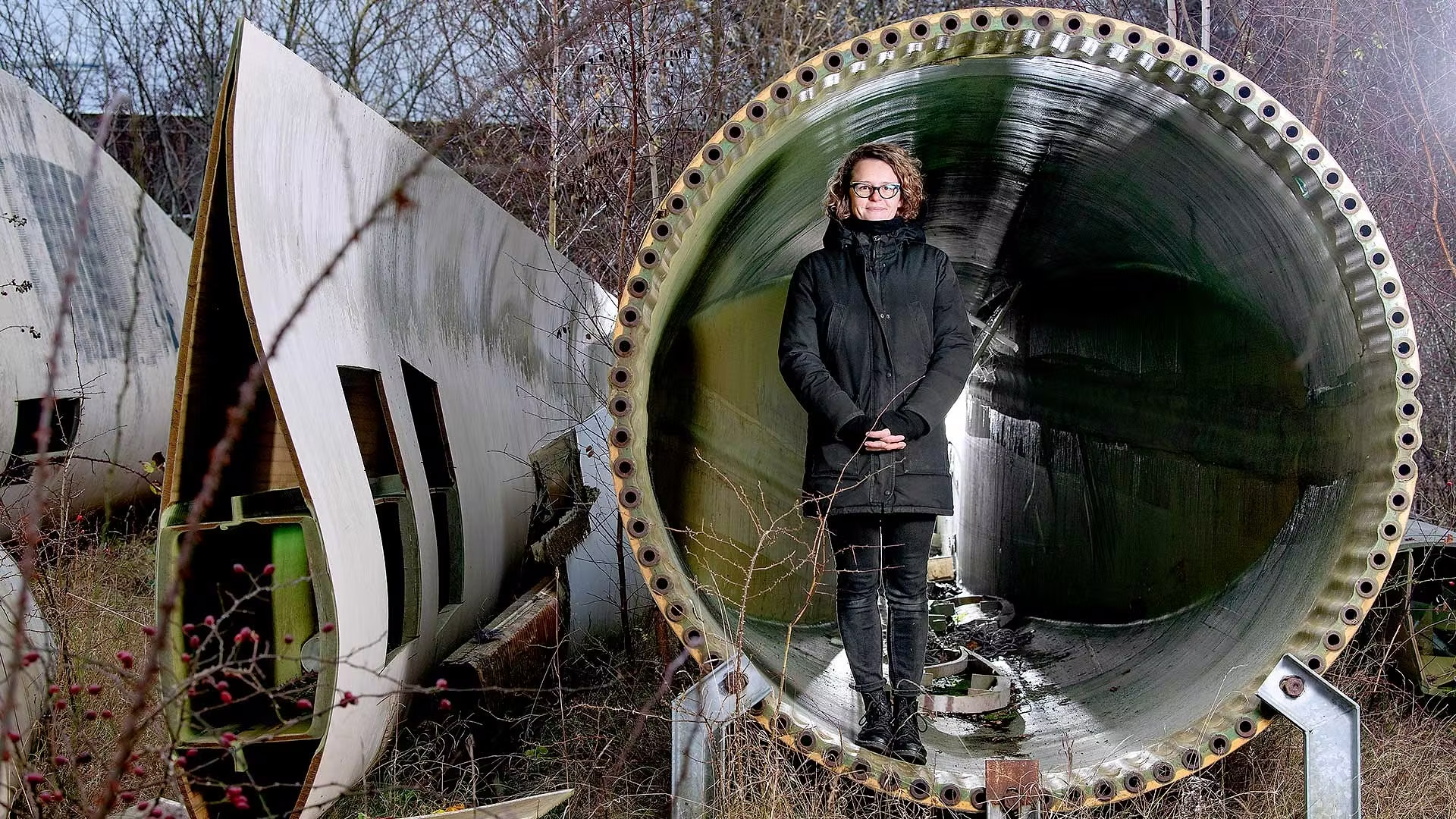
Course Video
Course Overview
The rapid growth of wind energy brings with it a pressing challenge: how to manage turbines and entire wind farms as they approach the end of their design life. With many assets now surpassing 20–25 years of operation, decisions around lifetime extension, repowering, or decommissioning have become critical. These choices require a careful balance of technical feasibility, financial performance, regulatory compliance, and sustainability.
Over five weeks, participants will build a comprehensive understanding of wind farm end-of-life management through a structured progression of methods, frameworks, and case perspectives.
The course follows a structured five-week progression:
Wind Turbine Lifetime and End-of-Life Overview: what defines the design lifetime of wind assets, what happens at end of life, typical EoL pathways, and how many onshore and offshore turbines are expected to reach EoL by 2030.
Technical Basis for Lifetime Extension: the technical requirements for lifetime extension, including load assumptions, fatigue damage, component degradation, remaining useful life estimation, and the additional challenges of extending operation.
Economics of Lifetime Extension and Decommissioning: the economic drivers for lifetime extension, cash-flow models, LCOE and NPV calculation, decommissioning impacts, and uncertainty in cost components.
Regulation and Procedures for Lifetime Extension: rules, guidelines, and practical procedures for lifetime extension of onshore wind in Denmark and Germany, and offshore wind at the European level.
Recycling, Policy, and Circularity of Wind Turbines: EoL recycling pathways, policy challenges, recyclability rates (including EN 45 555), and available recycling technologies, focusing on blades and magnets and their advantages and limitations.
Course Highlights
Here are the key highlights of the program, designed to give you a clear picture of what sets this course apart and how it can strengthen your expertise in wind energy.
Delivered by DTU, the global leader in wind energy research and education, drawing on decades of experience and close collaboration with industry.
Tailored for engineers, project developers, policymakers, and consultants who want to deepen their expertise in wind farm end-of-life management.
Teaching is grounded in academic excellence and international leadership, drawing directly on DTU’s role at the forefront of global best practices through IEA Wind projects— including leadership in lifetime extension and blade recycling (IEA Wind Task 42). Participants benefit from real‑world case studies that translate cutting‑edge research into practical, applicable knowledge.
MAIN GOAL
Learning Outcomes
After completion of this course, you will gain the ability to:
- + Explain and contextualise the end-of-life phase of wind assets, including design lifetime assumptions, expected end-of-life volumes, and typical decision pathways.
- + Analyse and apply methods to assess structural integrity, lifetime consumption, and remaining useful life of wind turbines.
- + Analyse economic drivers and apply models (e.g. LCoE, NPV, cash-flow) to evaluate lifetime extension and decommissioning decisions.
- + Analyse policy, regulatory, and technical constraints influencing recycling, decommissioning, and lifetime extension strategies across different markets.
- + Evaluate and compare end-of-life strategies (lifetime extension, recycling, and reuse) by integrating technical, economic, environmental, and uncertainty considerations.
Meet Your Instructors
Professor

Development Engineer
Senior Researcher
Senior Scientist
Postdoctoral Researcher
Admissions
Entry Requirements
- + There is no entry requirements for this course.
Teaching and Assessment Methods
- + Short video lectures introducing key concepts and methods
- + Curated readings and real-world examples from wind energy
- + Practical Excel-based exercises and quizzes for hands-on learning
- + Walkthroughs and discussion of exercises and results
- + Interpretation of key models (e.g. lifetime, LCoE, recycling)
- + Q&A and exchange of practical experiences
Application Deadline: 07/09/2026.
Practical Notes
- + The course runs over 5 weeks from 7 September to 15 October 2026 (weeks 37–42), with one module for each week.
- + Participants should expect an average time commitment of 4-5 hours per week, including:
- Self-paced study (videos, readings and exercises)
- Weekly live sessions for discussion and clarification - + The course is designed to be flexible, allowing participants to engage with learning materials at their own pace and according to their schedule. All core content remains available throughout the course, enabling participants to revisit materials as needed.
Fees & Funding
Tuition Fees
Course fee: 670 EUR
Visit institution page for information on fees and application deadlines.
Click here to visit institution page
Course Info
Contact course information for any additional information relating to this course.